Your Reception Guide: Tips for Cocktail Hour, Dinner, and the Dance Floor
Planning wisdom from watching many receptions unfold — covering cocktail hour, speeches, the first dance, and everything that fills the dance floor.

The reception is where the wedding becomes a party. The structure of the day eases off, the formality lifts, and the celebration takes over. Some of the most joyful, candid, and energetic photographs of the entire wedding come from this stretch.
This guide covers what I have learned about making the reception feel right, from cocktail hour through the last song on the dance floor. Some of it is photographic advice. Most of it is general planning wisdom from having watched many receptions unfold: the ones that hit and the ones that fell flat.
1. Make Cocktail Hour Feel Like Something
Cocktail hour is the bridge between the ceremony and dinner. It is also the moment when your guests have just witnessed something meaningful and are looking for somewhere to channel that energy.
The simplest thing you can do is give them something beyond standing around with a drink. Lawn games, a live musician, a photo booth, an interactive station like an oyster bar or espresso martinis made to order, or any small activity gives the hour a sense of flow. Couples sometimes leave cocktail hour as a passive holding period before dinner. The receptions that feel warmest tend to give this hour some intention.
Food matters here too. Substantial appetizers, more than you think you need, keep guests comfortable, particularly when speeches and dinner are still ahead.
Drinks for everyone. Signature cocktails are a fun way to make the bar feel personal. If you are doing signature drinks, consider offering at least one non-alcoholic option with the same level of care and presentation. Guests who do not drink, are pregnant, or are simply not drinking that night should be able to enjoy something that feels like part of the celebration rather than an afterthought. A good mocktail costs almost nothing extra and makes a meaningful difference in how inclusive the evening feels.
2. Flag Any Private or Unannounced Moments
Most events of the reception will be covered in your planning conversations and the final timeline that goes to your photography and video team. The one thing that sometimes gets missed is moments happening privately or not announced to guests: a quiet cake cutting away from the room, a surprise dance prepared by the wedding party, a private moment with parents before the reception begins.
If something like that is planned, make sure your photography and video team knows. These are some of the most meaningful and least repeatable images of the day, and they are easy to miss without a heads-up.
3. The First Dance
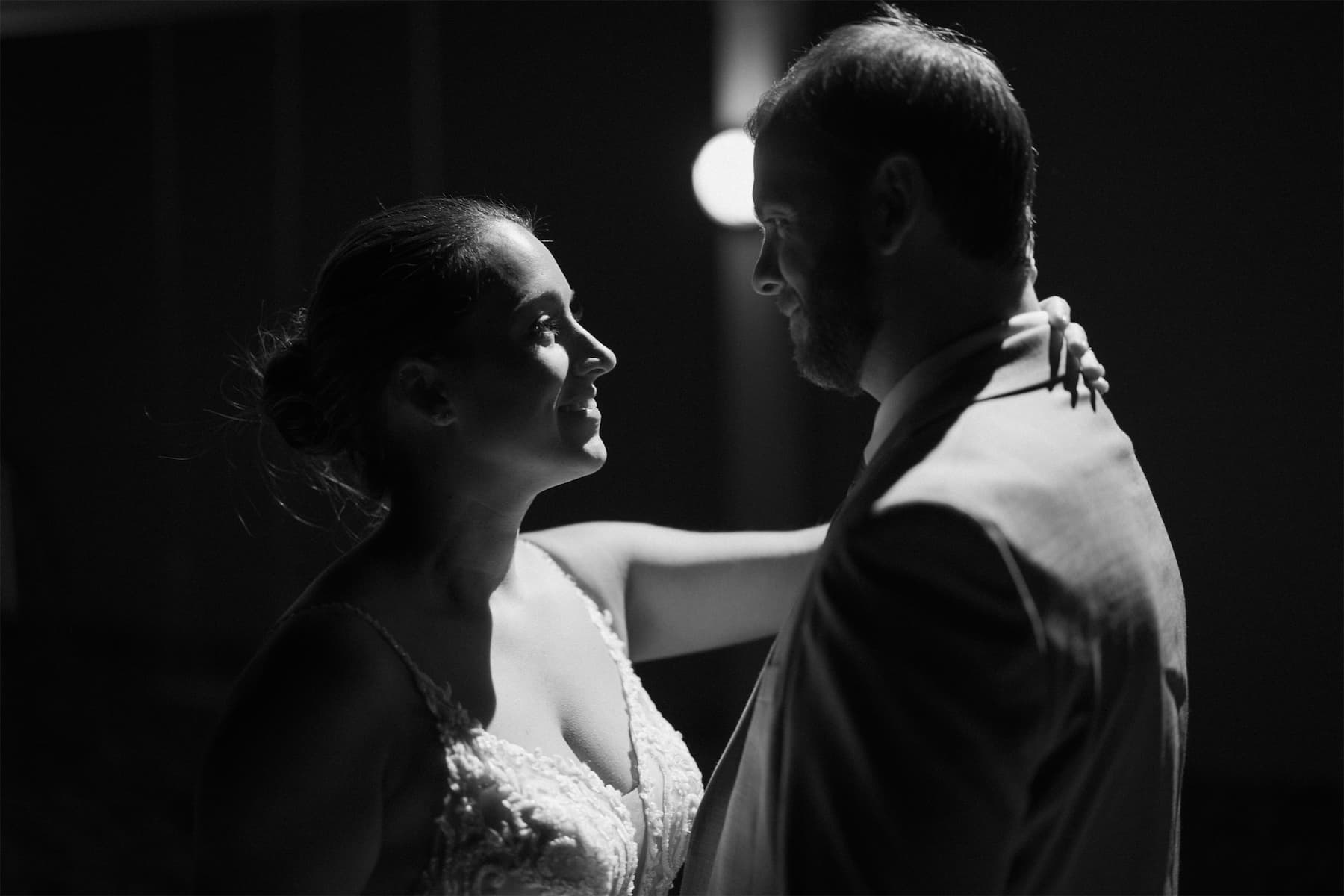
The first dance typically happens right after your introduction into the reception, and it is one of the most photographed moments of the entire wedding. A few small choices make a meaningful difference in how the photographs turn out. These come from running around dance floors at many weddings and learning what consistently works.
Keep one arm down. When you come together, the instinct is to put both arms up around each other. The problem is that both faces get covered by sleeves and fabric, and from any angle, the photographs become a wall of arms. Instead, have one arm up if you want, and let the other rest on your partner's hand, arm, or hip. Drop your elbow slightly. This opens up the frame and keeps your faces visible.
Stay connected with your faces. Either look at each other, or both face the same direction. Resting temple to temple works beautifully. What does not work is when one of you turns one way and the other turns the opposite way. From a camera's perspective, you end up with the back of one head and the front of the other, which is hard to sustain through an entire dance.
Be strategic with dips, twists, and turns. If you have a choreographed dance with specific moves, think about where on the dance floor they will happen. Photographers often position themselves on the far side of the floor or at an angle to catch the best light, so if a dip happens at a random spot without warning, we may not have time to get there. If possible, record a quick run-through on your phone (positioned where your guests will be sitting) and send it to your photography and video team in advance, so we know where to be for the key moments.
4. Put a Menu on Every Table
This is a small detail that does more than people realize. A printed menu on each table lets guests know what is being served, which matters most for guests with allergies or dietary restrictions who would otherwise have to ask. It also adds to the overall feel of the table and makes the dinner experience feel more considered.
If you are not printing individual menus for every place setting, at least one menu card per table is enough.
5. Time Your Speeches Carefully
The placement of speeches in your timeline affects how they land in person, in photographs, and on video.
When guests are actively eating, several problems compound. Photographs of the room end up full of people mid-bite, which is not what you want to remember. The constant clink of silverware and plates can also ruin the audio of the speeches if you are working with a video team. And the energy of the room is divided: people are paying half their attention to their plates and half to the speaker, which means neither one gets full focus.
Some of my favorite photographs from receptions are of you and your guests reacting to the speeches: the laughter, the quiet emotion, the looks across the room. To capture those reactions well, the ideal placement for speeches is before food is served, when everyone is fully present and looking up.
If scheduling speeches before dinner is not possible, the next best option is between courses. Just know that dirty plates and used napkins may appear in the photographs from that section. At the very least, make sure that as the couple, you are not actively chewing during any of the speeches. Your reaction is one of the most important parts of those photographs.
6. Skip the Microphone Stand
For speeches and toasts, ask whoever is providing sound (usually your DJ) for a handheld microphone rather than a stand-mounted one. A handheld mic gives the speaker the freedom to move, gesture, and connect with the room. It also makes for better photographs, since a mic stand puts a black metal pole between the speaker and the camera in every shot.
Encourage your speakers to look up from their notes too. Reading directly from a phone or paper the entire time disconnects them from the room. A glance down for a line, then back up to find the couple or the guests, is the rhythm that lands best. Speakers who do this end up with the most powerful photographs and the most engaged audiences.
7. Keep Dinner Music in the Background
Music during dinner sets the tone of the room, but it should sit underneath the conversation rather than competing with it. When the music is too loud, guests have to raise their voices to be heard at their own table, which exhausts everyone and dampens the energy that needs to carry into the dance floor.
Ask your DJ or band to keep dinner music at a level where people can comfortably talk to the person across from them without leaning in. The party comes later. Dinner is for the room to feel together.
8. Use Light to Build the Atmosphere
Ask your DJ about adding party lights for the dance floor portion of the reception. The transition from dinner lighting to dance floor lighting changes the entire feeling of the room and signals to guests that something different is happening.
This matters even more if your reception space has natural light coming through windows during the early evening. A room that still feels like daytime is a room that does not feel like a party. Party lights give the space its own energy and pull people toward the dance floor in a way that lighting alone often cannot.
9. Open the Dance Floor Strategically
Getting the dance floor going is one of the trickier parts of any reception. From what I have observed, the way the dance floor opens has a significant effect on whether the floor fills quickly or stays empty for the first thirty minutes.
I have also photographed receptions where the dance floor never really got going at all. Parent dances would happen, guests would barely register them, and most of the room continued chatting at their tables. Even with a good DJ and music people would have enjoyed, the energy never quite shifted to the floor. The strategies below are designed to prevent that drift by keeping guests engaged with the dance floor from the moment it opens.
Option one: parent dances at the edge of the floor. Schedule the parent dances immediately before the dance floor opens. As the parent dances begin, ask the DJ to invite all guests to gather around the dance floor. Once the dances end, you have a room full of people already standing at the edge of the floor, and the transition into open dancing happens almost automatically.
Option two: gradual escalation. Start with the first dance, then invite your parents to join you, then the wedding party with their partners, and then open the floor to everyone. It is a gradual build that adds energy organically and looks beautiful in photographs.
Option three: the big group photo. Gather all of your guests on the dance floor for a big group photograph after dinner. Once the photo is taken, transition straight into open dancing. The photograph gives everyone a reason to come together in one place, and the dance floor opens with the entire wedding already on it.
All three approaches beat the version where the dance floor opens cold and the DJ spends the first three songs trying to coax people out of their chairs.
10. Play Music You Actually Love
The DJ's job is to read the room, but the room takes its cues from the couple. Make sure the music being played is music you and your wedding party genuinely enjoy.
Classic wedding songs work well for older guests and tend to fill the floor early in the night. They will not, however, keep your friends dancing until midnight. Make sure the DJ has a clear sense of what you actually listen to. A shared playlist with your partner, the wedding party, and a few key friends is one of the best tools for this. Some couples send a brief survey to guests asking for one song they would love to hear, which doubles as a way to get guests invested in the dance floor before they even arrive.
11. Dance Floor Props Can Be Fun
Sunglasses, glow sticks, novelty hats, light-up bracelets — anything unexpected at a wedding tends to pull people onto the floor and produces some of the most joyful, unguarded photographs of the night. These do not have to be elaborate or expensive. A small basket of props brought out late in the evening is often enough to shift the energy when it starts to flag.
12. Plan for an Outfit Change if You Want One
Many couples switch into something more comfortable for the dance floor portion of the reception, particularly when the ceremony attire is heavy, long, or restrictive. A reception look gives you freedom to move and signals to guests that the formal portion of the evening is over.
If you are not changing, make sure your wedding attire is genuinely comfortable to dance in. A bustle on a dress, a loosened tie, or a removed jacket all help. The dance floor is not the place to be managing your outfit.
13. Stay Affectionate Throughout
This is the small piece of advice that produces some of the most beautiful unexpected photographs of the entire wedding.
Even when there is no formal moment on the timeline, even when you are just walking from the bar back to your table, stay physically close and affectionate with each other. A hand on the lower back, a quick kiss, fingers laced together, a quiet word in your partner's ear. These small gestures, in the in-between moments of the reception, are where some of the most honest and joyful candids of the day come from. We are not photographing them exactly. We are photographing what they reveal about you as a couple.
A Final Note
The reception is the part of the day where you finally get to exhale. The vows have been said, the dinner is winding down, and the room is yours.
The best receptions I have photographed have one thing in common: the couples were genuinely present. They danced with their grandparents, laughed at speeches that did not entirely make sense, hugged friends they had not seen in years, and let the night unfold without trying to manage every minute of it. That presence is what the photographs reflect.
This is your party. Spend it with the people you love.
Questions about any of this, or want to walk through your specific reception timeline? Send me a message anytime.